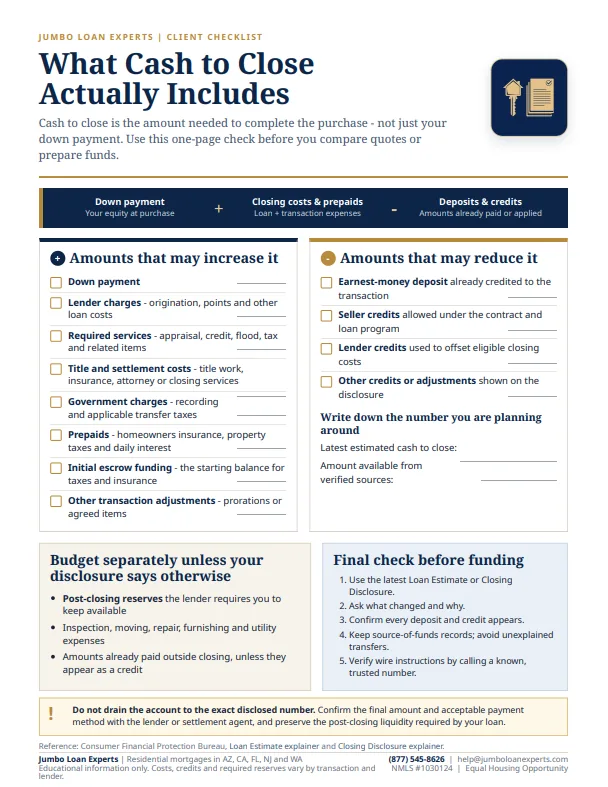
Cash to close is the amount needed to complete the purchase, not just your down payment. Use this check before you compare quotes or prepare funds.
In short: down payment, plus closing costs and prepaids (loan and transaction expenses), minus deposits and credits (amounts already paid or applied).
Amounts that may increase it
- Down payment: Your equity at purchase.
- Lender charges: Origination, points and other loan costs.
- Required services: Appraisal, credit, flood, tax and related items.
- Title and settlement costs: Title work, insurance, attorney or closing services.
- Government charges: Recording and applicable transfer taxes.
- Prepaids: Homeowners insurance, property taxes and daily interest.
- Initial escrow funding: The starting balance for taxes and insurance.
- Other transaction adjustments: Prorations or agreed items.
Amounts that may reduce it
- Earnest-money deposit already credited to the transaction
- Seller credits allowed under the contract and loan program
- Lender credits used to offset eligible closing costs
- Other credits or adjustments shown on the disclosure
Write down the number you are planning around: your latest estimated cash to close, and the amount available from verified sources.
Budget separately unless your disclosure says otherwise
- Post-closing reserves the lender requires you to keep available
- Inspection, moving, repair, furnishing and utility expenses
- Amounts already paid outside closing, unless they appear as a credit
Final check before funding
- 1.Use the latest Loan Estimate or Closing Disclosure.
- 2.Ask what changed and why.
- 3.Confirm every deposit and credit appears.
- 4.Keep source-of-funds records; avoid unexplained transfers.
- 5.Verify wire instructions by calling a known, trusted number.
Do not drain the account to the exact disclosed number. Confirm the final amount and acceptable payment method with the lender or settlement agent, and preserve the post-closing liquidity required by your loan.