Do not choose a down payment in isolation. Compare what goes into the home with what remains available after closing.
Know the four numbers
- Down payment: The purchase price you pay rather than finance.
- Closing costs and prepaids: Loan, title, recording, insurance, interest and escrow items.
- Cash to close: The actual amount due at closing after deposits and credits.
- Cash after closing: Your remaining funds. Lender-eligible reserves may be calculated differently.
Available funds - cash to close = cash remaining after closing
Before choosing an option
- Keep a separate emergency and ownership-cost buffer.
- Ask which assets count toward lender-required reserves.
- Confirm whether funds must be liquid, seasoned or documented.
- Include moving, repairs, furnishings and near-term obligations.
- Compare the monthly payment and mortgage insurance, if any.
- Recheck cash to close on the Closing Disclosure.
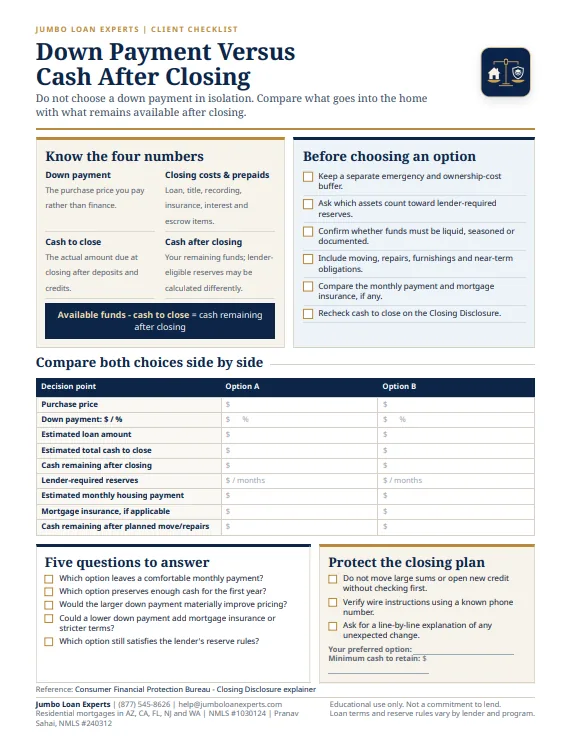
Compare both choices side by side
For each down payment option (Option A and Option B), write down:
- Purchase price
- Down payment, in dollars and as a percentage
- Estimated loan amount
- Estimated total cash to close
- Cash remaining after closing
- Lender-required reserves, in dollars and months
- Estimated monthly housing payment
- Mortgage insurance, if applicable
- Cash remaining after planned move and repairs
Five questions to answer
- 1.Which option leaves a comfortable monthly payment?
- 2.Which option preserves enough cash for the first year?
- 3.Would the larger down payment materially improve pricing?
- 4.Could a lower down payment add mortgage insurance or stricter terms?
- 5.Which option still satisfies the lender's reserve rules?
Then note your preferred option and the minimum cash you want to retain.
Protect the closing plan
- Do not move large sums or open new credit without checking first.
- Verify wire instructions using a known phone number.
- Ask for a line-by-line explanation of any unexpected change.