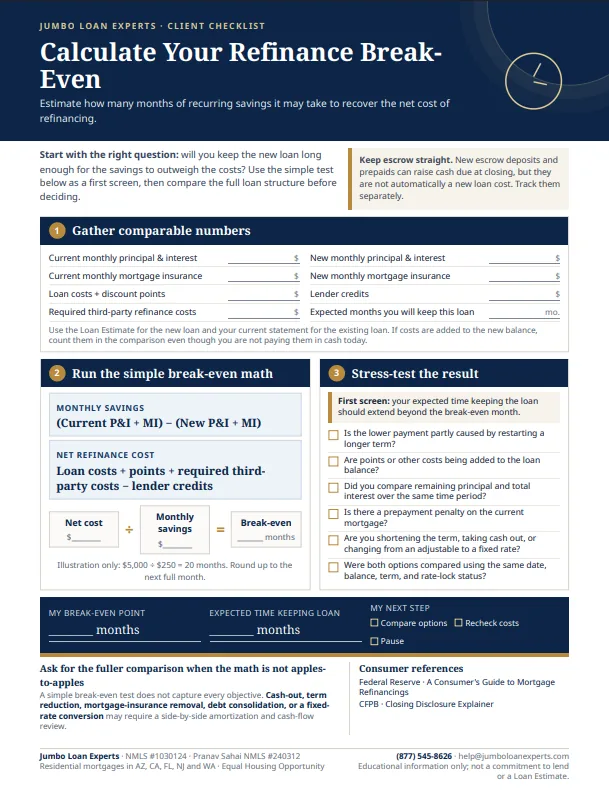
Estimate how many months of recurring savings it may take to recover the net cost of refinancing.
Start with the right question: will you keep the new loan long enough for the savings to outweigh the costs? Use the simple test below as a first screen, then compare the full loan structure before deciding.
Gather comparable numbers
- Current monthly principal and interest
- New monthly principal and interest
- Current monthly mortgage insurance
- New monthly mortgage insurance
- Loan costs plus discount points
- Lender credits
- Required third-party refinance costs
- Expected months you will keep this loan
Use the Loan Estimate for the new loan and your current statement for the existing loan. If costs are added to the new balance, count them in the comparison even though you are not paying them in cash today.
Keep escrow straight
New escrow deposits and prepaids can raise cash due at closing, but they are not automatically a new loan cost. Track them separately.
Run the simple break-even math
- Monthly savings: (Current P&I + MI) - (New P&I + MI)
- Net refinance cost: Loan costs + points + required third-party costs - lender credits
- Break-even: Net cost ÷ monthly savings = months
Illustration only: $5,000 ÷ $250 = 20 months. Round up to the next full month.
Stress-test the result
First screen: your expected time keeping the loan should extend beyond the break-even month.
- Is the lower payment partly caused by restarting a longer term?
- Are points or other costs being added to the loan balance?
- Did you compare remaining principal and total interest over the same time period?
- Is there a prepayment penalty on the current mortgage?
- Are you shortening the term, taking cash out, or changing from an adjustable to a fixed rate?
- Were both options compared using the same date, balance, term, and rate-lock status?
Write down your break-even point and your expected time keeping the loan, then choose your next step: recheck costs, compare options, or pause.
Ask for the fuller comparison when the math is not apples-to-apples
A simple break-even test does not capture every objective. Cash-out, term reduction, mortgage-insurance removal, debt consolidation, or a fixed-rate conversion may require a side-by-side amortization and cash-flow review.